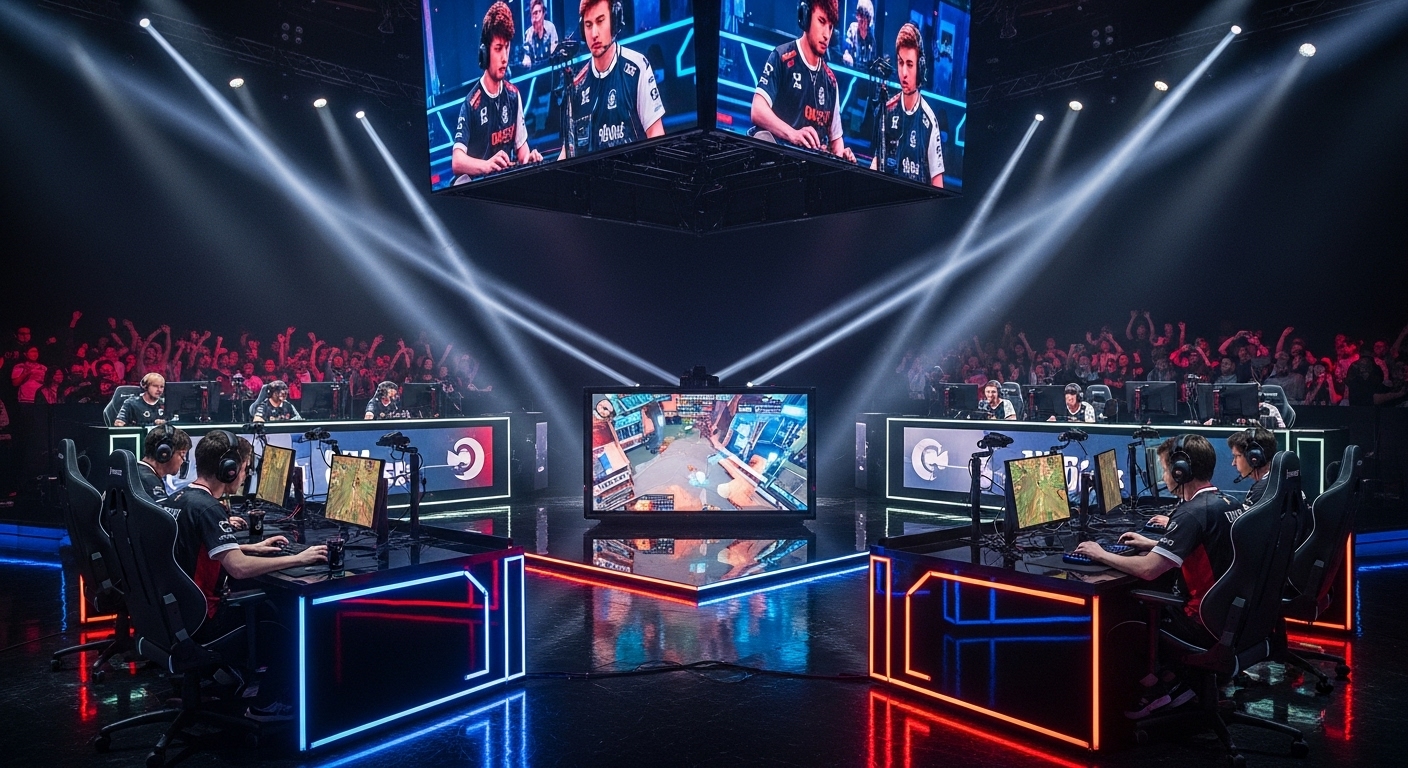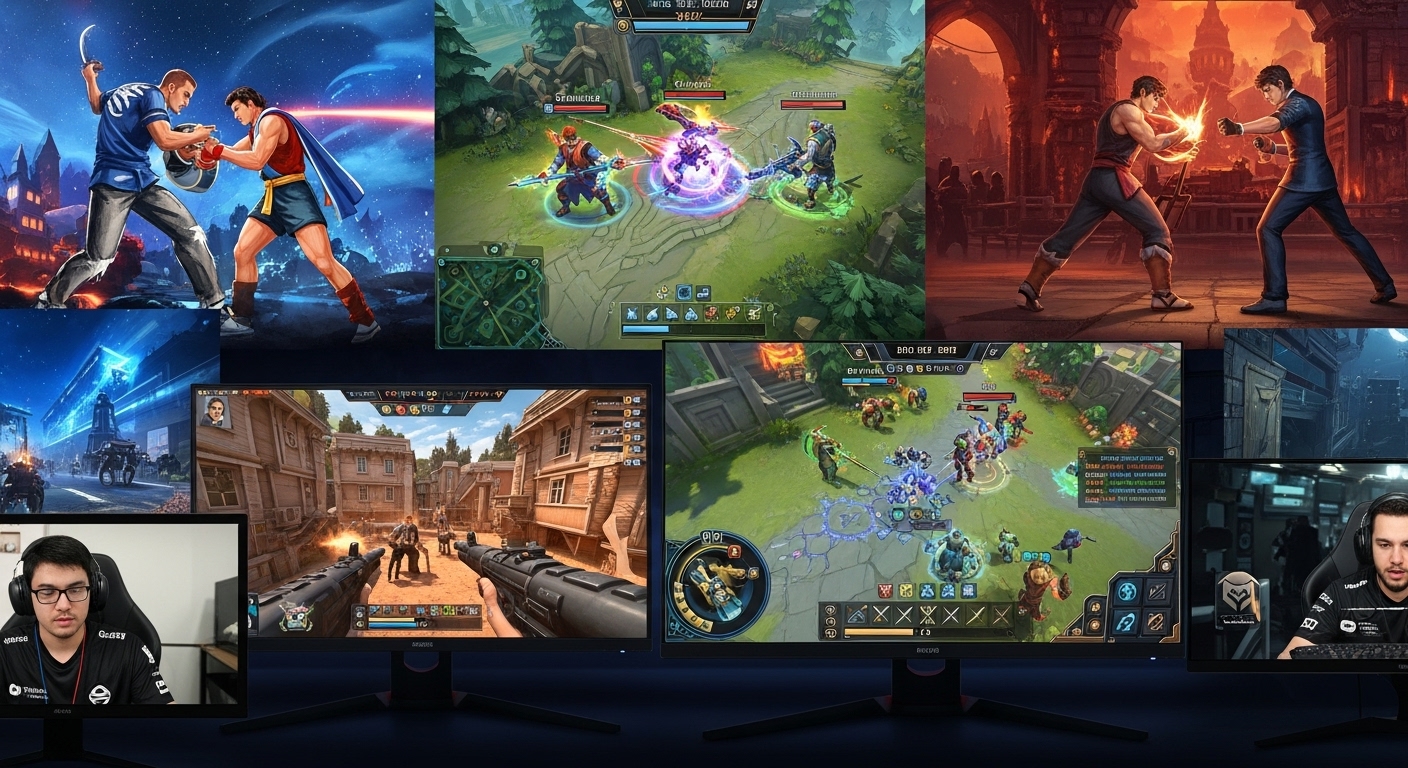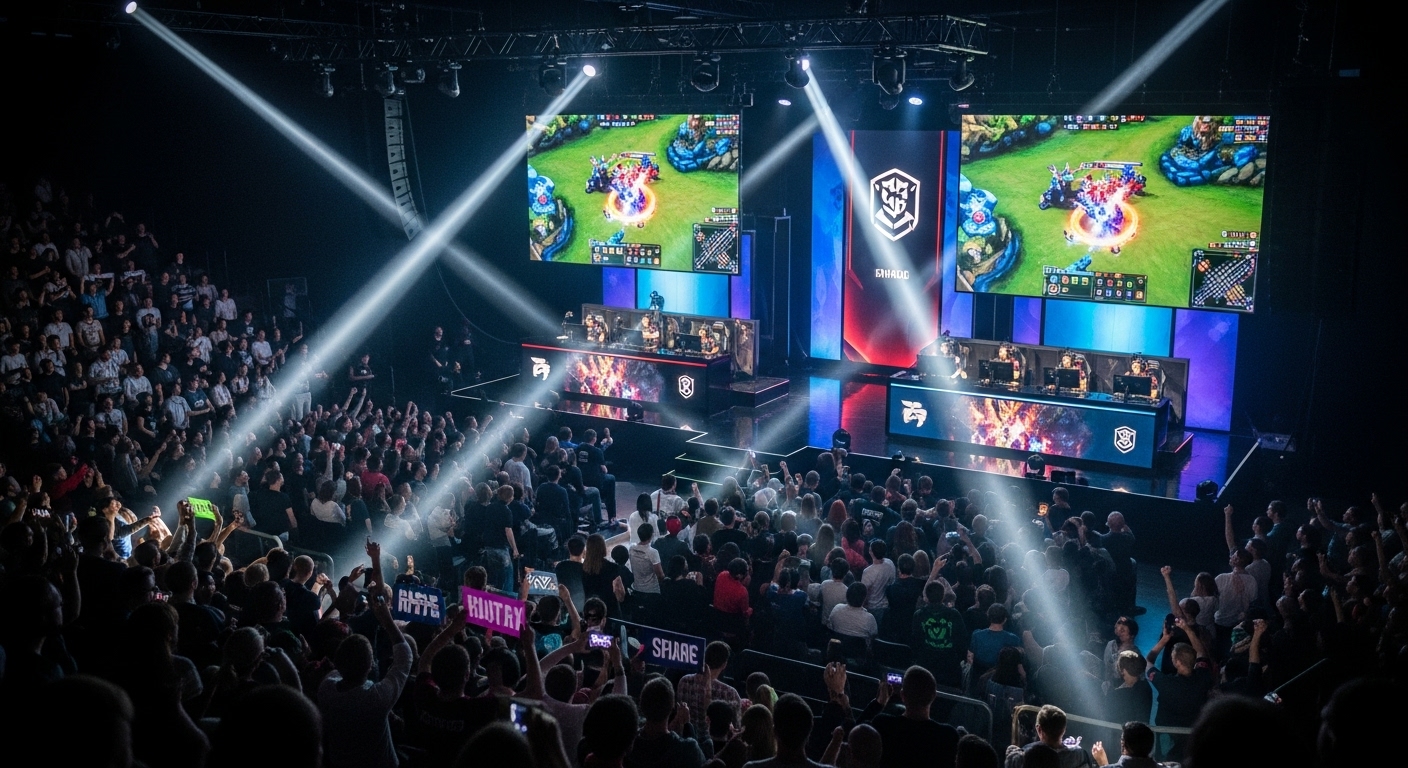






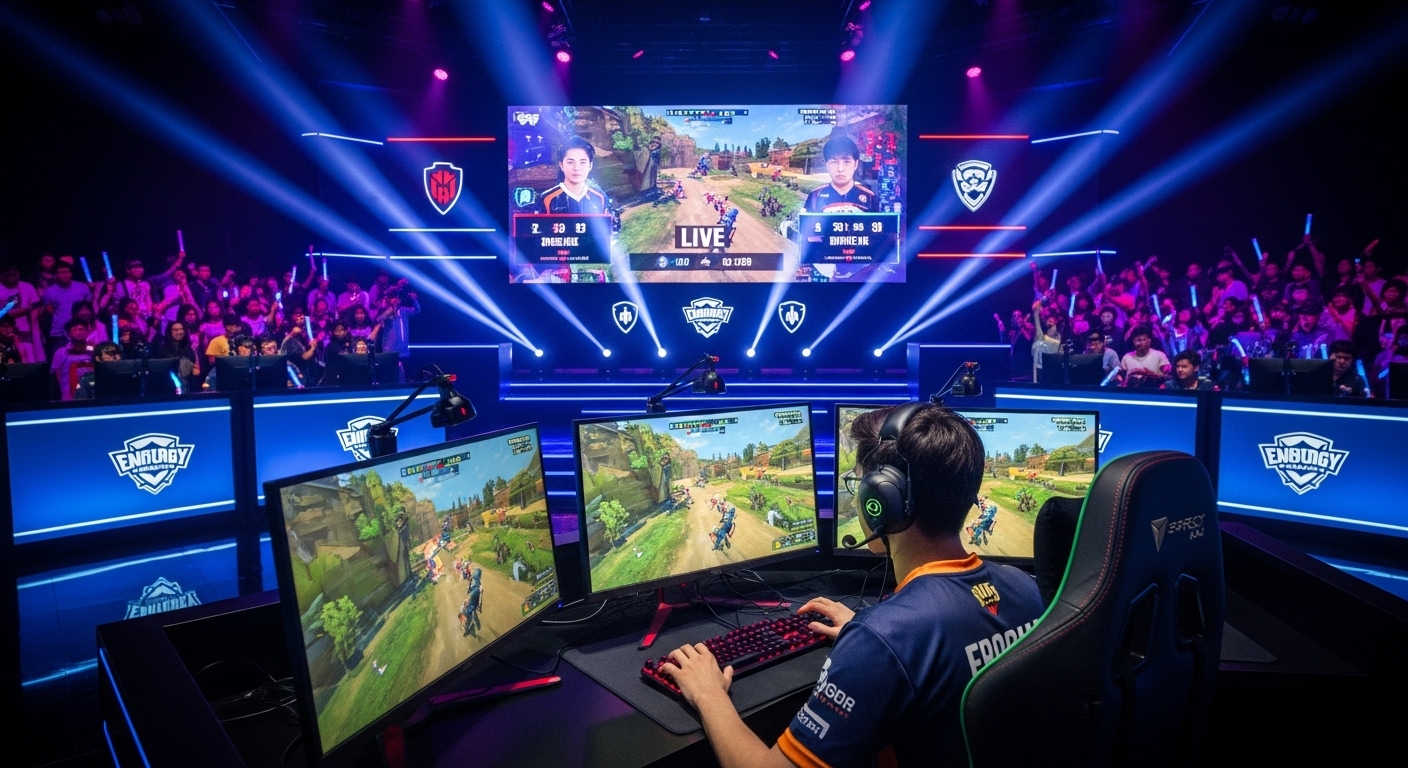
Esports, short for electronic sports, has grown from a small-scale hobby for gaming enthusiasts into a billion-dollar global industry that captivates millions of players and viewers across the world. Once seen as a fringe pastime, competitive gaming has become a cultural force, reshaping entertainment, technology, education, and even traditional sports. The rise of esports represents not just the growth of video games but a broader transformation in how people connect, compete, and consume content in the digital age.
The Origins of Esports: Humble Beginnings
The concept of competitive gaming began long before modern esports arenas and professional teams existed. The first known video game competition took place in 1972 at Stanford University, where students competed in a game called “Spacewar!” for a subscription to Rolling Stone magazine. While this event may seem quaint compared to today’s multimillion-dollar tournaments, it marked the beginning of organized video game competition.
During the 1980s, the arcade era played a crucial role in expanding gaming competitions. Titles like Pac-Man, Donkey Kong, and Space Invaders became testing grounds for high-score chases. Players would gather at local arcades to prove their skills, and leaderboards became a way to gain prestige. In 1980, Atari hosted the Space Invaders Championship, attracting over ten thousand participants across the United States. This was a landmark event that foreshadowed the potential of competitive gaming.
The 1990s brought new momentum as home consoles and PC gaming grew in popularity. Games such as Street Fighter II and Doom fueled the first wave of competitive gaming communities. Local tournaments became more common, and the arrival of the internet opened doors for online play. Suddenly, players could compete across long distances, sparking the creation of early esports organizations and leagues.
The Rise of Online Play and Early Esports Leagues
The late 1990s and early 2000s marked a turning point for esports. With the advancement of broadband internet, competitive gaming shifted from small local gatherings to online platforms where global competition was possible. Titles like StarCraft, Quake, and Counter-Strike became cornerstones of the early esports scene. South Korea, in particular, played a pioneering role. The government’s investment in broadband infrastructure and the popularity of PC bangs—gaming cafés—created an environment where esports could flourish.
In South Korea, professional players became celebrities. Television networks began broadcasting matches, and the country established the first professional esports organizations. Games like StarCraft: Brood War were treated with the same seriousness as traditional sports, complete with commentators, analysis, and sponsorships. This model would later influence the global esports ecosystem.
Meanwhile, in the West, early tournaments such as the Cyberathlete Professional League (CPL), the Electronic Sports World Cup (ESWC), and Major League Gaming (MLG) began to take shape. These organizations laid the foundation for structured competition and prize pools that would grow exponentially in the following decades. What had started as a hobby was beginning to show signs of becoming a legitimate profession.
The Explosion of Esports in the 2010s
The 2010s witnessed an explosion in esports popularity, driven by several key factors: the rise of streaming platforms, the growth of social media, and the mainstreaming of gaming culture. Platforms like Twitch and YouTube Gaming allowed fans to watch live competitions from anywhere in the world. This direct connection between players and audiences fundamentally changed how esports were consumed. Viewership skyrocketed, and tournaments that once drew a few thousand spectators began attracting millions.
Games like League of Legends, Dota 2, and Counter-Strike: Global Offensive became global esports juggernauts. Riot Games’ League of Legends World Championship and Valve’s Dota 2 International offered massive prize pools and cinematic production values rivaling traditional sporting events. In 2019, The International boasted a prize pool exceeding thirty million dollars, setting a record in competitive gaming history.
Esports also diversified beyond strategy and shooting games. Titles like Overwatch, Fortnite, and Rocket League brought new audiences into the fold. Fortnite in particular blurred the lines between gaming and entertainment, with its celebrity players, crossover events, and concerts within the game itself. The notion that esports were only for a niche audience evaporated as mainstream media began covering major tournaments and household brands entered sponsorship deals.
The Role of Streaming and Content Creation
Streaming revolutionized esports by making it accessible to a global audience in real time. Unlike traditional sports broadcasts that required television networks, esports thrived on digital platforms where anyone could watch or even participate. Twitch, launched in 2011, became the central hub for live gaming content. Streamers developed their own communities, and some became as popular as the professional players themselves.
This ecosystem of players, streamers, and fans created a feedback loop that fueled esports growth. Viewers could interact with their favorite players through chat, follow their training sessions, and learn strategies directly from them. The barrier between athlete and audience virtually disappeared, creating a sense of intimacy and community rarely found in traditional sports.
YouTube and social media platforms amplified this even further. Highlight reels, tutorials, and behind-the-scenes content helped fans stay engaged between tournaments. This content-driven approach not only kept audiences entertained but also offered new revenue streams for players and teams through sponsorships and advertising.
The Professionalization of Esports
As esports gained mainstream recognition, it also became more structured and professional. Teams began adopting organizational models similar to traditional sports franchises. Players signed contracts, had coaches, analysts, and managers, and trained full-time. Sponsorships from technology companies, beverage brands, and even automotive giants poured in, funding player salaries and infrastructure.
Franchise systems emerged in games like Overwatch and Call of Duty, creating city-based teams that mirrored professional leagues such as the NBA or NFL. This approach aimed to build local fanbases and ensure financial stability through shared revenue. Training facilities, player housing, and sports psychologists became standard parts of professional esports life. The industry’s growing maturity also led to the establishment of governing bodies to regulate competition and player welfare.
Universities began offering esports scholarships, recognizing competitive gaming as a legitimate path for talented students. Academic programs in esports management, game design, and broadcasting reflected the expanding ecosystem surrounding competitive gaming. Esports had become not just about playing games but about creating an entire industry with diverse career opportunities.
The Spectator Experience: A New Kind of Entertainment
Watching esports is a unique experience that combines the excitement of competition with the creativity of gaming. Unlike traditional sports, where the field and rules are fixed, esports arenas exist within virtual worlds that can change dramatically from match to match. Each game has its own meta, strategy, and visual style, keeping the viewing experience dynamic and unpredictable.
Commentary plays a crucial role in making esports accessible. Casters provide play-by-play narration and analysis, helping viewers understand complex strategies. The production values of major tournaments have reached cinematic levels, with elaborate stage designs, light shows, and digital effects. Audiences in packed arenas cheer for their favorite teams just as passionately as fans at a soccer or basketball game.
Moreover, esports has created global communities that transcend geographic boundaries. A fan in Brazil can support a team in Europe or Asia without ever leaving their home. Online forums, Discord servers, and social media have become digital stadiums where fans discuss matches, share highlights, and celebrate victories together.
The Economic Impact of Esports
The economic growth of esports has been staggering. The industry generates billions in revenue from sponsorships, advertising, ticket sales, and media rights. Major brands now invest heavily in esports as a way to reach younger, tech-savvy audiences who may not engage with traditional sports. Apparel companies design team jerseys and merchandise, while hardware manufacturers develop specialized gaming equipment endorsed by professional players.
The esports job market has expanded far beyond players and coaches. Event organizers, broadcasters, marketers, and content creators all play essential roles in the ecosystem. Cities around the world are building esports arenas and hosting international tournaments to attract tourism and investment. In countries like South Korea, China, and the United States, esports contributes significantly to the entertainment economy.
This economic boom has also inspired traditional sports organizations to enter the space. Many football, basketball, and baseball teams now own or sponsor esports divisions. The crossover between traditional and digital sports has blurred lines, creating new opportunities for collaboration and fan engagement.
Challenges Facing the Esports Industry
Despite its rapid growth, esports faces several challenges that must be addressed to ensure long-term sustainability. One major issue is player burnout. Professional gamers often start their careers in their teens and retire in their twenties due to the intense physical and mental demands of competition. The pressure to perform, combined with long practice hours and constant travel, can take a toll on health and well-being.
Another challenge is maintaining competitive integrity. Issues such as cheating, match-fixing, and doping have occasionally surfaced, prompting calls for stricter regulation. As prize pools and sponsorships increase, so does the temptation for unethical behavior. The establishment of clear rules, anti-cheat systems, and governing bodies is crucial to preserving credibility.
Financial stability is another concern. While top-tier teams and players earn substantial incomes, many lower-tier competitors struggle to make a living. Unequal distribution of resources can create barriers for newcomers and stifle diversity within the scene. The industry also needs to address issues of representation, ensuring that players from different backgrounds and genders have equal opportunities.
The Role of Esports in Education and Culture
Esports has begun to influence education and culture in profound ways. Schools and universities have recognized the potential of gaming to teach teamwork, strategic thinking, and problem-solving. Esports programs offer students opportunities to develop communication skills, leadership qualities, and technological literacy. Competitive gaming clubs and college leagues are fostering a sense of community and school spirit similar to traditional athletics.
Culturally, esports has become a unifying force. It brings together people from diverse backgrounds who share a passion for gaming. Tournaments often feature international teams and multilingual broadcasts, promoting cross-cultural exchange. Esports also challenges traditional notions of athleticism, highlighting mental agility, coordination, and teamwork as equally valuable forms of skill.
The growing acceptance of gaming as a legitimate form of entertainment has also influenced mainstream media. Movies, documentaries, and television shows have explored the world of esports, while celebrities and musicians increasingly participate in gaming-related events. Esports is no longer confined to the digital realm—it has become an integral part of global pop culture.
The Future of Esports: Innovation and Expansion
Looking ahead, the future of esports appears boundless. Technological innovations such as virtual reality, augmented reality, and artificial intelligence are poised to reshape the gaming experience. Virtual reality esports could bring players and audiences closer together than ever before, offering immersive competitions that blend physical movement with digital environments.
Mobile gaming is another frontier driving expansion, particularly in regions like Southeast Asia, India, and Latin America. Games like Mobile Legends, PUBG Mobile, and Free Fire have made competitive gaming accessible to millions who may not own high-end PCs or consoles. The democratization of esports through mobile platforms is creating a truly global ecosystem.
As esports continues to mature, partnerships with education, health, and technology sectors will deepen. Initiatives promoting player wellness, diversity, and ethical competition are likely to become standard. Moreover, as more countries recognize esports as an official sport, we may even see its inclusion in global events such as the Olympic Games.
Conclusion: The Power of Play
Esports represents far more than just competitive gaming—it embodies the evolution of play in the digital era. It bridges cultures, generations, and technologies, transforming how people engage with entertainment and community. What began as a small competition in a university lab has grown into a global spectacle that rivals the world’s biggest sporting events.
The story of esports is one of passion, innovation, and perseverance. It shows that the desire to compete, connect, and create is universal, whether on a soccer field or a virtual battlefield. As technology continues to evolve and audiences expand, esports will remain at the forefront of the cultural conversation—an enduring testament to the power of play in bringing the world together.