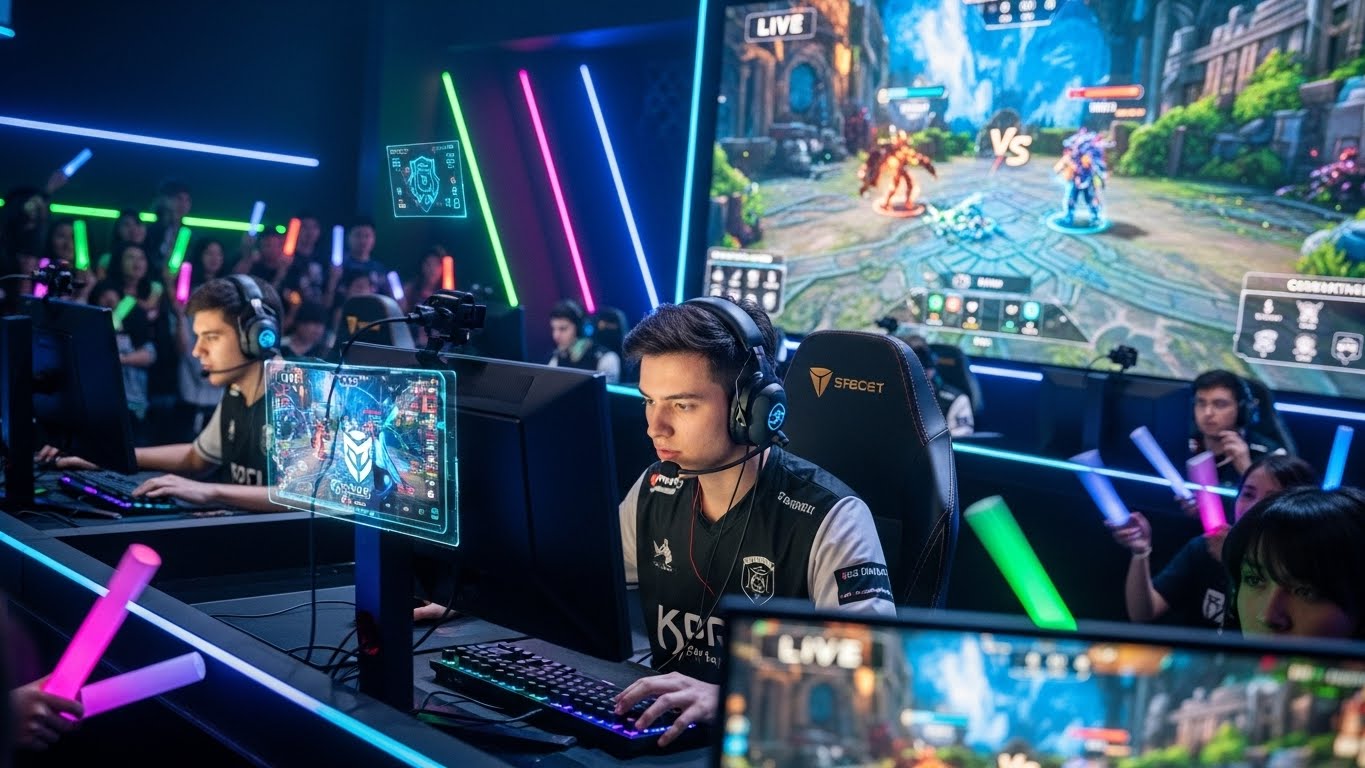






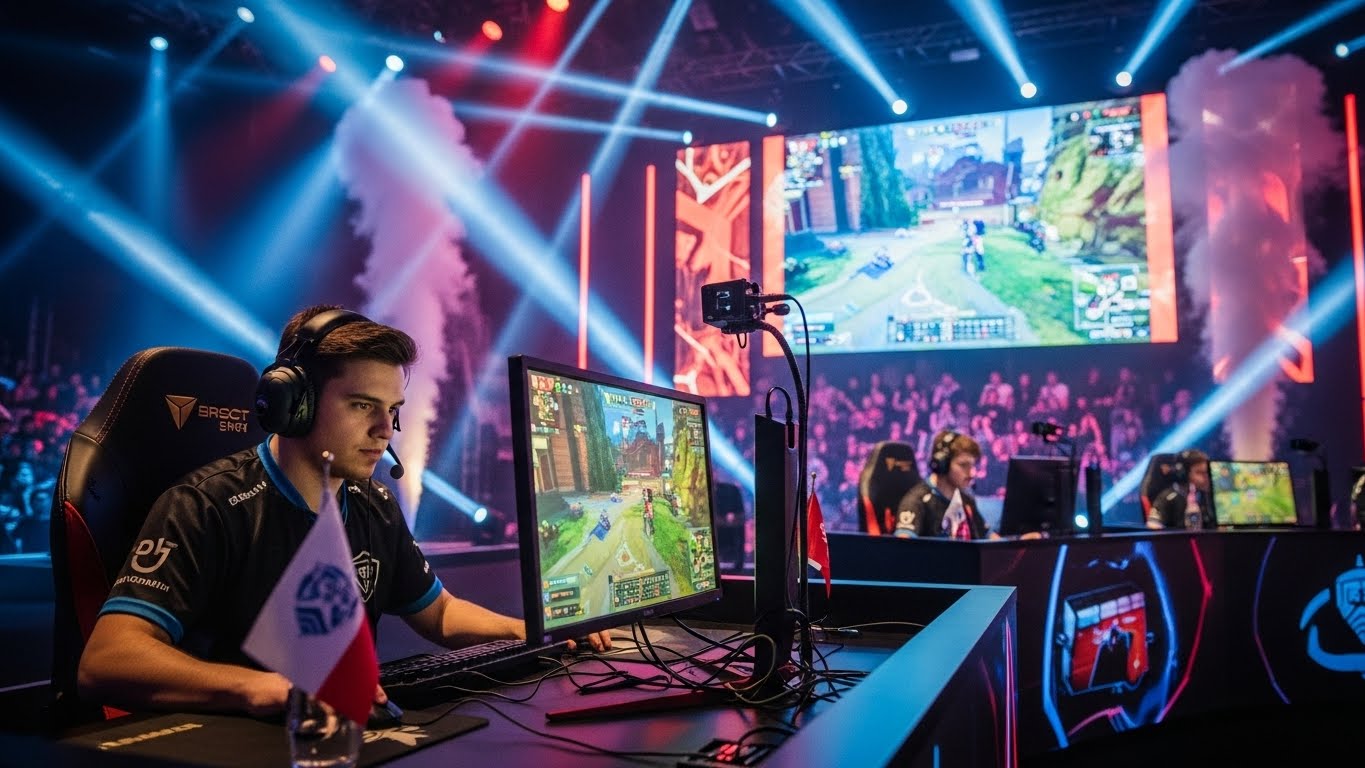
In the past decade, esports has undergone a transformation, evolving from a niche hobby into a billion-dollar industry that has captured the attention of millions across the globe. What was once considered a pastime for a small group of gamers has now become a major form of entertainment, with professional players, massive tournaments, and dedicated fan bases rivaling those of traditional sports. As the world of esports continues to grow, it has created new career opportunities, sparked social movements, and paved the way for new technology innovations. In this post, we’ll explore the rise of esports, its cultural impact, economic power, and future trajectory.
What is Esports?
At its core, esports (short for electronic sports) refers to organized multiplayer video game competitions, particularly between professional players, either individually or as teams. The competitive gaming scene has gained widespread attention due to the professionalism of players, the organization of tournaments, and the global reach of events. Games like League of Legends, Counter-Strike: Global Offensive, Dota 2, and Fortnite are some of the most popular titles in esports, with major tournaments offering millions of dollars in prize money.
Unlike casual gaming, where individuals play for fun or personal achievement, esports involves highly skilled players and organized teams competing for prestige, sponsorship deals, and massive financial rewards. Tournaments are often broadcasted online via platforms like Twitch, YouTube, or Facebook Gaming, where fans can watch live streams, interact with players, and enjoy commentary from experts in the field.
The Evolution of Esports: From Hobby to Profession
The roots of esports trace back to the early days of gaming when tournaments were often small, informal events. The first known esports competition was held in 1972 at Stanford University. Known as the “Intergalactic Spacewar Olympics,” it was a competition based on the video game Spacewar. While this marked the beginning of competitive gaming, it wasn’t until the late 1990s and early 2000s that esports truly began to take shape.
The 1990s saw the release of iconic multiplayer games like StarCraft and Quake, which had a significant impact on the development of esports. In particular, South Korea played a pivotal role in shaping competitive gaming during this time, as it was one of the first countries to establish a formal esports scene. StarCraft tournaments began attracting large audiences, and dedicated TV networks even started broadcasting gaming events. This helped solidify esports as a legitimate form of entertainment.
As internet speeds improved and online gaming became more accessible, esports continued to grow, especially with the rise of games like Warcraft III, Counter-Strike, and League of Legends. Esports tournaments began to offer substantial prize money, attracting professional players and organizations that saw the opportunity to build careers and brands around competitive gaming.
By the 2010s, esports had become a multi-billion-dollar industry. Major events like The International (the world championship for Dota 2) and the League of Legends World Championship became massive spectacles, drawing millions of viewers and offering tens of millions of dollars in prize pools. In fact, some of the prize pools in these tournaments rivaled those of prestigious traditional sports events like the Super Bowl or Wimbledon.
The Esports Ecosystem: A Complex Industry
The esports ecosystem is multifaceted, involving a wide range of players, organizations, and industries. The main pillars of this ecosystem include professional players and teams, tournament organizers, sponsors, content creators, and streaming platforms.
Professional Players and Teams
Esports players are often compared to professional athletes in traditional sports. To reach the highest level of competition, they must dedicate thousands of hours to honing their skills, developing strategies, and mastering their chosen game. Esports teams, much like those in football or basketball, are made up of players who specialize in specific roles within the game. The success of these teams is often reliant on teamwork, communication, and strategic planning.
Many esports players are scouted by professional organizations that offer financial support, training, and sponsorships. These organizations typically provide players with the resources they need to succeed, including coaches, analysts, and other staff members who help improve the team’s performance.
Tournament Organizers and Sponsorships
Tournament organizers are the driving force behind the competitive gaming events that attract large audiences. Companies like ESL, DreamHack, and Riot Games (the developer behind League of Legends) are among the top names in esports tournament organization. These companies work with sponsors, broadcasters, and teams to create high-quality events that offer significant prize pools and attract top-tier players.
Sponsorship deals are an essential aspect of the esports industry. Brands like Intel, Coca-Cola, and Nike have invested heavily in esports to reach younger audiences who are often hard to engage with through traditional media. These sponsorships help fund tournaments, players, and teams, while also allowing brands to build strong relationships with the gaming community.
Streaming Platforms and Content Creators
The rise of streaming platforms like Twitch, YouTube Gaming, and Facebook Gaming has been a game-changer for the esports industry. These platforms allow players, teams, and organizations to broadcast their gameplay to millions of viewers, creating opportunities for fan engagement and monetization. In fact, many professional esports players and teams have become major content creators, earning substantial income from streaming, sponsorships, and advertisements.
Viewers can watch their favorite players in action, interact with them in real-time through live chat, and learn more about the game through expert commentary and analysis. This level of interactivity has helped create a deep connection between fans and players, making esports a more engaging and immersive experience than traditional sports.
The Cultural Impact of Esports
Esports has had a profound effect on popular culture. Gaming, once seen as a solitary hobby for geeks and introverts, is now celebrated as a global phenomenon. Esports events are often held in large arenas or stadiums, and fans can attend these events just as they would any major sporting event. The rise of professional gaming has made stars out of players who are now household names.
Esports has also played a significant role in changing the perception of gaming as a whole. What was once considered a “waste of time” by many is now seen as a legitimate career path. Young gamers who once dreamed of playing professionally now have an avenue to do so. The industry also provides opportunities for coaches, analysts, commentators, and even streamers, creating a diverse job market.
Moreover, esports has fostered a sense of global community. Fans from around the world can connect through online platforms and social media, regardless of geographical boundaries. The growth of esports has also helped promote inclusivity, as players of all genders, races, and backgrounds can participate in and enjoy competitive gaming.
The Economic Impact of Esports
Esports is no longer just a hobby; it has become a multi-billion-dollar industry with far-reaching economic implications. Revenue streams for esports come from various sources, including sponsorships, advertising, media rights, merchandise sales, and ticket sales for live events.
In recent years, the prize pools for major esports tournaments have reached astronomical numbers. For instance, The International 2018, a Dota 2 tournament, boasted a prize pool of over $25 million, with the winning team taking home $11 million. These prize pools are funded through crowd-sourcing, sponsorships, and media rights.
The economic impact extends beyond the players and teams. Esports has created jobs in marketing, event planning, broadcasting, game development, and more. Esports organizations are now employing coaches, analysts, public relations professionals, and content creators, creating a thriving job market within the gaming industry. Additionally, streaming platforms have become essential to the distribution of esports content, offering new ways for both established and aspiring creators to monetize their content.
The Future of Esports: What’s Next?
As esports continues to evolve, the future looks incredibly bright. The integration of new technologies such as virtual reality (VR) and augmented reality (AR) will likely change the way games are played and watched. These technologies could offer a more immersive experience for both players and viewers, potentially leading to entirely new forms of competitive gaming.
Another exciting development is the possibility of esports becoming a part of traditional sporting events. The Olympic Games, for instance, has been considering the inclusion of esports as an official event, acknowledging its massive popularity and the cultural impact it has had globally. As the lines between traditional sports and esports continue to blur, we may see even more collaborations and crossover events.
Esports will also continue to expand globally. While North America, Europe, and Asia have dominated the industry, other regions, such as Latin America, Africa, and the Middle East, are beginning to develop their own esports ecosystems. This will not only increase the global reach of esports but also diversify the types of games and tournaments that are available.
Conclusion
Esports has come a long way from its humble beginnings. What was once a niche activity has become a global industry that touches every aspect of entertainment, technology, and culture. With millions of fans, massive prize pools, and a growing number of professional players, esports has firmly entrenched itself as a mainstream form of entertainment.
As we look to the future, it’s clear that esports will continue to shape the way we experience gaming and entertainment. Whether you’re a player, a fan, or an industry professional, the esports revolution is just getting started. The world of competitive gaming is more exciting, diverse, and accessible than ever, and the best is yet to come.