






Introduction
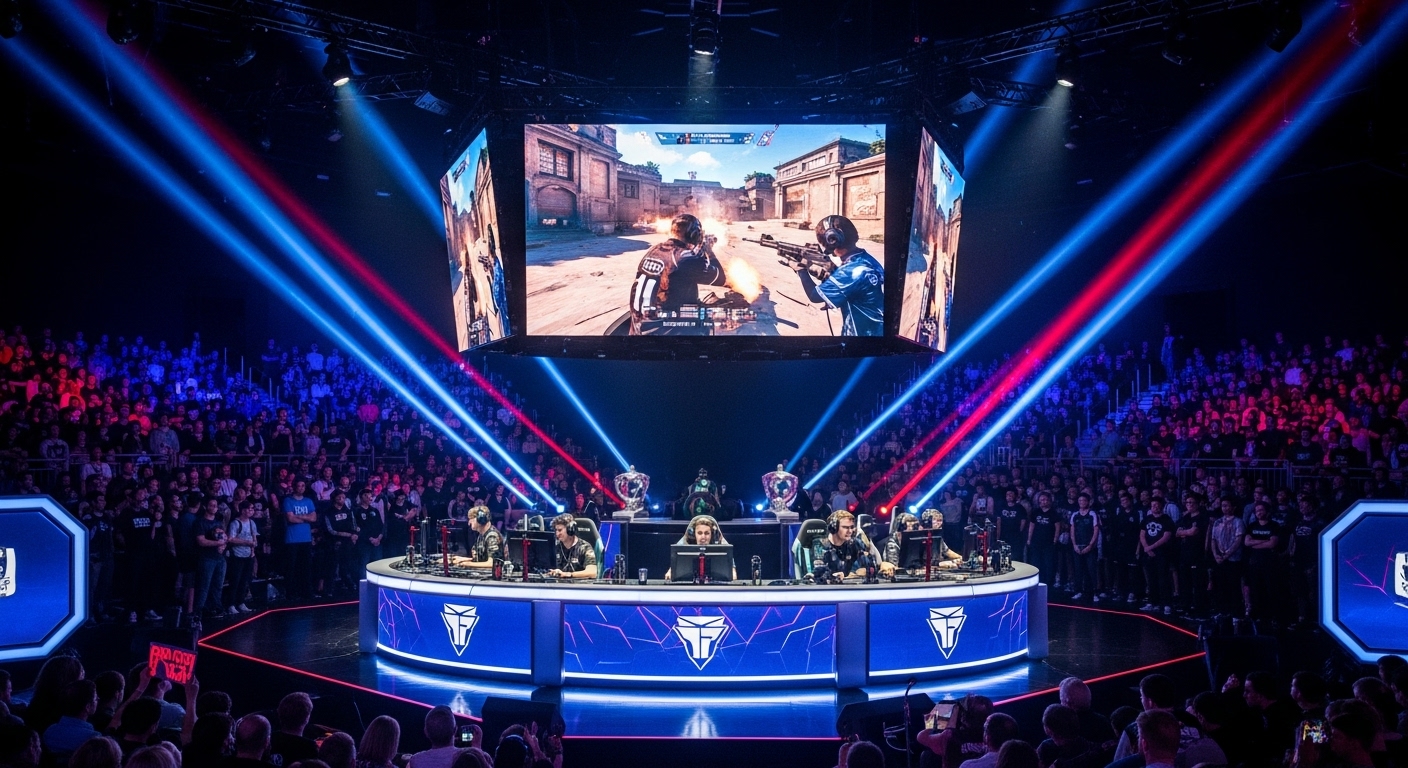
Esports has evolved from a niche hobby into a global entertainment phenomenon, attracting millions of viewers around the world. From massive tournaments in sold-out arenas to livestreams that reach audiences across continents, esports has become one of the fastest-growing forms of competitive entertainment. Yet, as the industry expands, so does the desire for innovation in how fans experience the action. One of the most transformative technologies poised to reshape esports viewing is Virtual Reality, or VR.
VR broadcasting promises to take fans beyond the traditional screen and place them directly inside the action. Instead of simply watching their favorite players compete, viewers could find themselves sitting in a virtual stadium, walking around a digital arena, or even standing right behind a professional gamer’s avatar. The potential of VR broadcasting goes far beyond immersion — it could redefine how audiences engage, interact, and even participate in esports events.
This blog explores the rise of VR technology, its growing role in esports broadcasting, and the ways it will completely change how fans experience competitive gaming.
The Evolution of Esports Broadcasting
To understand how VR could revolutionize esports, it’s important to consider how broadcasting has evolved over time. In the early days, esports viewing was simple: tournaments were streamed through basic online platforms with limited production value. Viewers watched gameplay from fixed camera angles, with commentators narrating the events much like traditional sports.
As the industry matured, production quality improved dramatically. High-definition streaming, advanced graphics overlays, instant replays, and professional commentary transformed esports into a global entertainment product. Esports broadcasters began to experiment with new perspectives — spectator modes, in-game cameras, and multi-angle replays — all designed to give fans a deeper connection to the competition.
Now, the next logical step in this evolution is immersive broadcasting. Virtual Reality allows audiences to transcend flat screens and experience the game from within its digital world. Instead of watching from a distance, viewers become part of the event itself.
What Is VR Broadcasting?
VR broadcasting combines live event streaming with virtual reality technology to create a fully immersive viewing experience. Using a VR headset, fans can enter a 3D environment where the esports event unfolds around them in real time. Instead of passively watching a livestream, they can explore virtual arenas, change perspectives, and interact with digital elements.
In practical terms, VR broadcasting uses multiple data streams — including in-game visuals, player perspectives, and camera feeds — to build a 360-degree view of the action. The audience can move freely, select specific points of interest, or even “sit” next to other virtual spectators. It’s the difference between watching a football match on TV and being transported directly into the stadium.
Immersion Beyond the Screen
One of the most powerful aspects of VR broadcasting is immersion. Traditional viewing limits fans to a single camera feed, but VR removes that boundary entirely. Imagine watching a major esports final and being able to switch from a spectator seat in the digital crowd to standing right behind a player’s avatar during a crucial play.
This level of immersion makes the experience more emotional and memorable. Fans won’t just observe the game — they will feel as though they are inside it. Visuals, sounds, and even spatial cues will create a sense of presence that traditional viewing cannot match. Every explosion, crowd cheer, and moment of tension will feel real, as if the viewer is living inside the competition.
The Rise of Virtual Esports Arenas
VR broadcasting opens up the potential for fully virtual esports arenas — 3D spaces designed specifically for immersive viewing. These digital venues could replicate real-world stadiums or exist entirely in fantastical environments that reflect the game’s style.
For example, a VR broadcast of a racing esports event might take place in a futuristic cyber-track floating above a cityscape, while a fantasy RPG tournament could be held inside a virtual castle with magical effects. Fans could walk through lobbies, interact with avatars of other spectators, and even access special rooms for team meetups or interviews.
These virtual arenas also provide new opportunities for sponsors and organizers. Brands can design interactive advertisements, merchandise displays, and mini-games that engage audiences during breaks, turning esports viewing into a complete entertainment experience rather than a passive broadcast.
Personalization and Control for Viewers
Another major shift VR broadcasting introduces is viewer control. In traditional esports streams, production teams decide which camera angles or player perspectives to show. With VR, the viewer takes full control. They can choose where to look, how to watch, and what details to focus on.
This level of personalization gives fans the freedom to tailor the experience to their interests. Some may prefer to watch from a bird’s-eye view to analyze strategy, while others might want to focus on a single player’s perspective to understand their decision-making. The ability to customize viewing transforms fans from passive spectators into active participants.
Additionally, VR broadcasting could integrate interactive data overlays. Viewers might access real-time stats, player health, or map control areas simply by glancing at virtual panels within their headset. This seamless combination of immersion and information makes esports viewing more engaging and informative than ever before.
Social Interaction in Virtual Spaces
Esports has always been about community. Fans connect through chat rooms, forums, and social media, sharing excitement and opinions during live matches. VR broadcasting enhances this community aspect by allowing fans to interact within shared virtual spaces.
In a VR esports arena, you could sit next to a friend’s avatar even if they’re on the other side of the world. You could chat, celebrate big plays together, or join public fan zones where thousands gather virtually. This form of digital presence strengthens the emotional bond between fans and creates a global, shared experience unlike anything seen before.
Furthermore, these interactions can mimic real-life social experiences. Applause, cheers, and crowd reactions could be simulated in real time, making each event feel alive. VR esports viewing thus bridges the gap between online and physical fandom, giving viewers the sense of being truly “there.”
The Role of Augmented Reality (AR) in Hybrid Experiences
While VR focuses on total immersion, augmented reality — or AR — will likely complement esports broadcasting in hybrid formats. AR allows fans to project digital visuals onto the real world using smart glasses or mobile devices. Imagine watching a live esports match while holographic overlays display player stats or live mini-maps on your coffee table.
Combined with VR, AR could create layered experiences. Viewers might switch between immersive VR for major moments and AR-enhanced reality for casual viewing. This hybrid approach could make esports accessible to a wider audience, accommodating both hardcore fans and those who prefer lighter interactions.
Transforming Esports Commentary and Analysis
VR broadcasting will also revolutionize how commentators and analysts present matches. In a VR environment, analysts could use 3D replays, virtual maps, and spatial visuals to explain strategies in real time. Instead of relying on flat 2D graphics, they could walk viewers through tactical breakdowns inside a 3D representation of the game world.
This method not only improves understanding but also enhances entertainment value. Fans could follow along interactively, seeing strategies unfold from new perspectives. As a result, esports broadcasting would become more educational, engaging, and visually dynamic.
The Impact on Esports Production and Events
Introducing VR broadcasting will require major adjustments in production workflows. Traditional broadcasting uses camera feeds and game captures, but VR streaming demands complex 3D rendering, spatial audio, and synchronized data integration.
Event organizers will need to design matches and venues with VR in mind. Cameras or digital capture points will have to record in 360 degrees, while developers may need to optimize games for immersive viewing. Despite the added complexity, the benefits are immense. VR broadcasting could turn esports events into monumental experiences, drawing in new audiences who crave cutting-edge entertainment.
Furthermore, VR production opens doors for entirely virtual tournaments. Teams could compete remotely, while fans gather in a digital arena to watch them in real time. This removes logistical barriers like travel costs and venue limitations, creating a more sustainable and accessible competitive ecosystem.
Monetization Opportunities in VR Esports Viewing
With new technology comes new business potential. VR broadcasting introduces numerous monetization models that could redefine esports economics.
Virtual tickets could grant fans different levels of access. Basic entry might include general seating in the virtual arena, while premium passes could offer exclusive camera angles, backstage content, or one-on-one meetups with players in virtual lounges.
Additionally, in-VR merchandise stores could allow fans to purchase digital collectibles, team skins, or virtual items during live events. Interactive sponsorship placements within the environment — such as branded billboards or 3D product displays — could also become a major source of revenue.
These new revenue streams would not only benefit organizers but also players and teams, further professionalizing the esports industry.
Accessibility and Global Reach
One of the greatest advantages of VR broadcasting is accessibility. Not everyone can afford to travel to live esports tournaments, but with a VR headset, anyone can join from anywhere. Fans in distant regions can enjoy the same immersive experience as those sitting in front-row seats at physical venues.
This global accessibility could drastically expand the esports audience. It breaks down geographic barriers, allowing fans from different countries to unite in the same virtual space. In turn, esports becomes even more inclusive and international, aligning with its digital-first nature.
Challenges and Limitations of VR Broadcasting
Despite its potential, VR broadcasting faces several challenges that must be addressed before becoming mainstream.
First, the cost of VR headsets and high-speed internet remains a barrier for many users. Although prices are gradually decreasing, mass adoption will take time. Second, technical limitations such as latency, motion sickness, and hardware performance can affect the quality of the experience.
Another challenge is production complexity. VR broadcasting requires specialized equipment, skilled technicians, and significant computing resources. Organizers must balance immersive quality with cost-effectiveness to ensure scalability.
Lastly, ensuring inclusivity for those without VR devices is crucial. Hybrid formats combining traditional streams and VR experiences may be necessary to cater to all audiences.
The Role of Game Developers in the VR Era
Game developers will play a central role in shaping the future of VR esports broadcasting. Integrating native VR viewing modes directly into games could streamline the process and enhance viewer control. Developers can create spectator-friendly tools, camera systems, and interactive overlays designed specifically for immersive experiences.
Some titles, especially first-person shooters and racing games, are already experimenting with VR-compatible viewing. As technology progresses, more esports titles will likely follow, adapting their engines and designs for immersive compatibility.
Developers will also need to collaborate closely with broadcasters and event organizers to ensure smooth integration between gameplay and live VR feeds. This synergy will be essential to delivering seamless and captivating broadcasts.
Potential Impact on Fan Engagement and Loyalty
VR broadcasting is not just about technology — it’s about deepening emotional engagement. When fans feel as though they are truly present in the arena, their emotional investment intensifies. The sense of connection to players and teams strengthens, creating more loyal fan communities.
Interactive VR features, such as virtual autographs, fan shoutouts, or meet-and-greets, could further personalize the experience. Fans would no longer just watch esports; they would live it. This heightened engagement could lead to longer viewing times, greater participation in events, and stronger community bonds.
Education and Training Opportunities
Beyond entertainment, VR broadcasting can also serve educational purposes within esports. Aspiring players can use VR replays to study professional strategies from immersive perspectives. Coaches can analyze movements, team positioning, and map control in 3D environments, making training more effective.
In addition, educational institutions offering esports programs can incorporate VR broadcasts into their curriculum. Students can learn about broadcasting, production, and analysis in hands-on virtual simulations, preparing them for future careers in the industry.
Looking Ahead: The Future of Esports Viewing
The future of esports viewing is heading toward interactivity, immersion, and community. VR broadcasting represents the culmination of these trends, merging cutting-edge technology with fan passion. As headsets become more affordable and internet infrastructure improves, VR will likely become a mainstream way to watch esports.
We can imagine a world where major esports events attract millions of simultaneous VR viewers — each exploring, cheering, and interacting within vast digital arenas. The experience will be more than just watching a game; it will be a shared adventure across global communities united by competition and technology.
Conclusion
Virtual Reality broadcasting is poised to redefine how audiences experience esports. By transporting fans directly into digital arenas, offering personalized control, and enabling real-time social interaction, VR transforms passive spectators into active participants.
While challenges remain, the potential benefits far outweigh the obstacles. Immersive viewing, new monetization models, and global accessibility will push esports into a new era of entertainment. For fans, it means being closer than ever to the action. For players and organizers, it opens a world of creative and commercial possibilities.
In the coming years, as VR technology continues to evolve, esports viewing will no longer be something we watch — it will be something we live.