





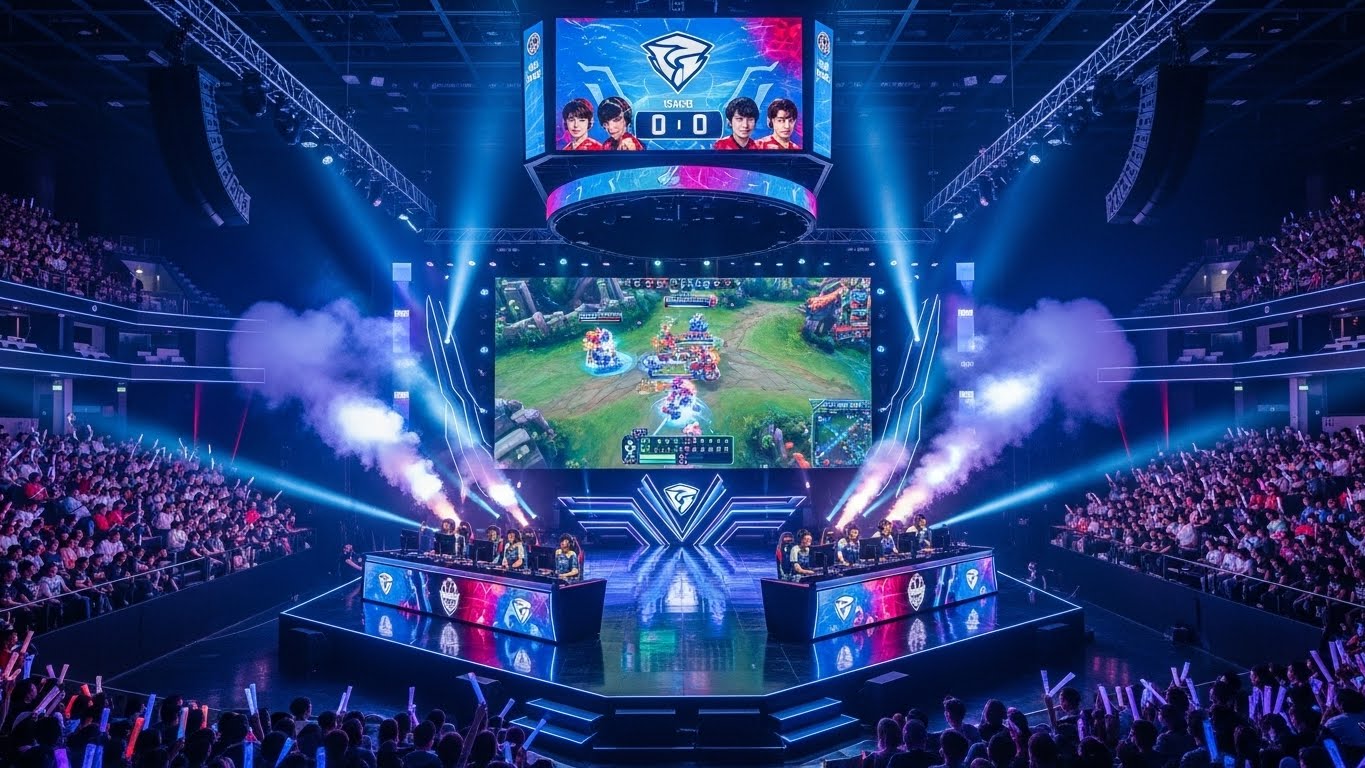
Esports, short for electronic sports, has evolved from a niche hobby to a multi-billion-dollar global phenomenon. With its roots deeply embedded in the world of competitive gaming, esports has become an arena where professional players, teams, and even entire organizations battle it out for both fame and fortune. This blog post explores the journey of esports from its humble beginnings to its massive presence in the entertainment industry today, highlighting the key components that make it such a fascinating and lucrative space.
What is Esports?
At its core, esports is the competitive side of video gaming, where players participate in organized, multiplayer video game competitions. Unlike casual gaming, esports is structured, often involving professional players, coaches, and analysts, with tournaments that are either hosted online or in large arenas. The games vary, ranging from strategy titles like League of Legends to fast-paced shooters such as Counter-Strike: Global Offensive and Overwatch.
Esports competitions can be individual or team-based, and they often follow a series of structured events culminating in a championship. These tournaments can be watched by millions around the world, either in person or via live streams on platforms like Twitch, YouTube Gaming, and Facebook Gaming.
The Early Days: From LAN Parties to Professional Tournaments
Esports did not start with the glamour and massive prize pools we see today. In fact, the history of esports goes back to the early days of video gaming when players would gather for informal “LAN parties.” LAN, short for Local Area Network, allowed players to connect their computers to compete against each other in games like Quake or StarCraft.
The first major esports tournament is widely considered to be the 1997 Red Annihilation tournament, held for the game Quake. The event marked a turning point in competitive gaming, as the winner, Dennis “Thresh” Fong, took home a Ferrari. The idea that esports could offer not only recognition but also financial rewards was born here.
In the years that followed, the esports landscape continued to evolve, with tournaments for games like Warcraft III, StarCraft, and Dota 2 gaining traction. These tournaments were primarily grassroots events organized by gaming communities and developers, and the prize pools, though modest compared to today’s standards, provided an early glimpse into esports’ potential as a serious competitive endeavor.
The Growth and Expansion of Esports
The real explosion of esports happened in the 2010s when companies like Riot Games, Blizzard, and Valve began investing heavily in both game development and the creation of professional leagues. Riot Games’ League of Legends (LoL), released in 2009, is often credited with driving esports into the mainstream. LoL’s World Championship, which started in 2011, became one of the most-watched esports events globally, attracting millions of viewers and offering prize pools that reached millions of dollars.
Along with LoL, Blizzard’s Overwatch and Valve’s Dota 2 also became pillars of the esports ecosystem. The International, Dota 2’s flagship tournament, famously offered a record-breaking prize pool that exceeded $40 million in 2018, showcasing just how lucrative esports had become.
Another factor in the rapid growth of esports has been the rise of streaming platforms. Websites like Twitch have made it easy for players to broadcast their gameplay live to audiences around the world. This has created a symbiotic relationship between gamers and fans, where influencers and streamers can build a loyal fan base while simultaneously growing the esports community.
Esports: A Multi-Billion-Dollar Industry
Today, the esports industry is worth billions of dollars, with revenue streams coming from various sources, including sponsorships, media rights, advertising, merchandise sales, and ticket sales. According to recent reports, the esports industry was expected to generate over $1.5 billion in 2023, and this figure continues to rise. Global brands, from Coca-Cola to Intel, have recognized the value of esports sponsorships, investing heavily to reach young, tech-savvy audiences who are deeply engaged with gaming culture.
This rapid growth has also attracted investment from traditional sports teams and celebrities. NBA teams, such as the Golden State Warriors and the Cleveland Cavaliers, have entered the esports market by owning esports franchises. Even athletes from traditional sports, including NBA star Shaquille O’Neal and football legend David Beckham, have invested in esports organizations.
Another area where esports has flourished is in the world of media rights. Networks like ESPN and Turner Sports have begun broadcasting esports tournaments, and streaming platforms like YouTube and Facebook have negotiated exclusive broadcasting deals with major esports leagues. The accessibility of live streaming has played a pivotal role in bridging the gap between players and viewers, creating a new form of entertainment.
The Players: The Heroes of Esports
Esports players are the athletes of this virtual world. These individuals spend countless hours practicing, perfecting their skills, and strategizing with their teams to become the best in their respective games. While many players begin their careers in their teens, the lifespan of an esports athlete can often be shorter than that of a traditional athlete. The intense training, stress, and mental fatigue of competitive gaming take a toll, and some players retire early, while others transition to coaching or broadcasting.
Despite the challenges, esports players are often celebrated as heroes within their gaming communities. Names like Faker (Lee Sang-hyeok), a South Korean League of Legends legend, and s1mple (Oleksandr Kostyliev), one of the greatest Counter-Strike players, have become synonymous with excellence in their respective games. These players are admired for their skill, dedication, and passion for their craft, and they inspire a new generation of gamers to follow in their footsteps.
The fame and fortune that come with being an esports player are significant. Many top players earn millions of dollars in prize money and sponsorships, and some have lucrative streaming careers alongside their competitive play. However, despite the financial rewards, esports players must deal with intense pressure to perform, and many deal with the same mental health challenges faced by athletes in traditional sports.
Esports and Its Impact on Traditional Sports
Esports has had a profound impact on traditional sports in recent years. As esports’ popularity continues to grow, it has forced traditional sports to rethink their strategies for engaging younger audiences. Younger generations are more likely to tune into a League of Legends match than a football game, and many sports teams have begun to recognize this shift in viewer preferences.
In response, we’ve seen traditional sports teams and organizations creating esports divisions. For example, several football clubs in Europe, such as FC Barcelona and Manchester City, have established esports teams to compete in FIFA and Pro Evolution Soccer. The crossover between esports and traditional sports is a testament to the growing influence and importance of competitive gaming in global culture.
Challenges Facing the Esports Industry
Despite its incredible growth, the esports industry is not without its challenges. One of the biggest issues is the sustainability of esports as a professional career. The rapid rise of esports has led to a saturation of the market, with hundreds of new tournaments, teams, and leagues emerging each year. While this creates opportunities for new talent, it also means that many players may struggle to find stable careers or earn significant money outside the top-tier competitions.
Another challenge is the lack of regulation and standardization in the industry. Unlike traditional sports, where leagues are governed by long-established institutions, esports remains fragmented. Different games have their own leagues, and players often have to juggle multiple tournaments for different games. This lack of centralization can lead to inconsistent standards, with some events being well-organized and others falling short in terms of production quality and player safety.
Moreover, issues like match-fixing, doping, and harassment have surfaced in the esports world, which mirrors some of the challenges faced by traditional sports. As esports matures, it will need to address these issues and create a more professional, ethical environment for players, teams, and fans.
The Future of Esports
Looking ahead, the future of esports appears to be incredibly bright. The continued rise of virtual reality (VR) and augmented reality (AR) technology could offer a new dimension to competitive gaming, allowing for more immersive and dynamic experiences for both players and viewers. Additionally, the integration of blockchain and NFTs could revolutionize the way in which digital assets, such as skins and in-game items, are bought, sold, and traded.
As esports continues to evolve, it will likely become more integrated with traditional forms of entertainment. The potential for esports to become a global spectacle on the scale of the Olympics or the Super Bowl is within reach. Major networks are already broadcasting esports events, and it is only a matter of time before we see even more crossovers between esports and traditional entertainment.
Conclusion
Esports is more than just a trend; it is a cultural revolution that has redefined the way we view gaming and competition. From its humble beginnings in LAN parties to its current status as a global industry, esports has proven to be a force to be reckoned with. The passion and dedication of players, the growing investment from sponsors, and the increasing popularity among fans all point to a future where esports is not only a form of entertainment but also a major driver of culture, technology, and business.
As we look toward the future, it is clear that esports will continue to grow, and its impact on entertainment, society, and even traditional sports will only intensify. The evolution of esports is far from over, and those who are part of this exciting journey will undoubtedly shape the landscape of competitive gaming for generations to come.