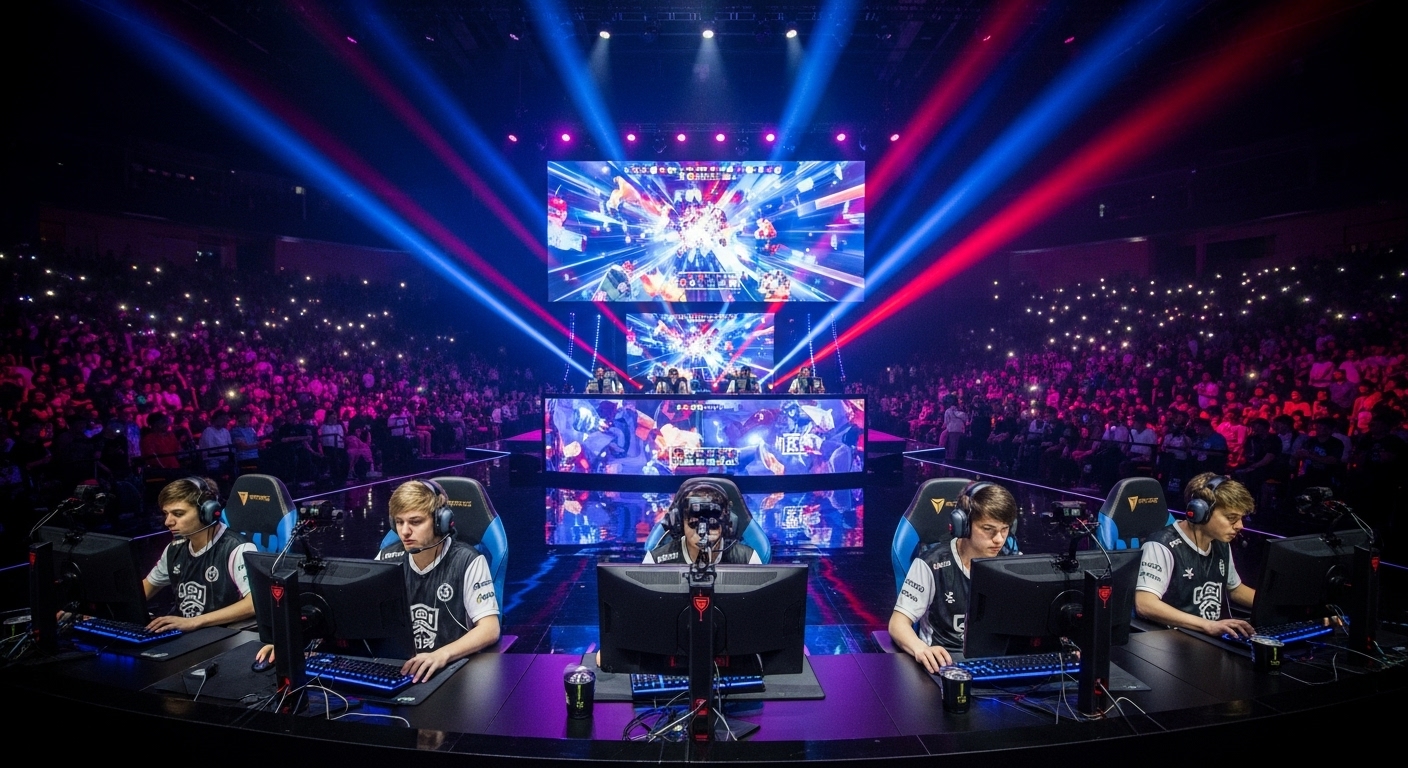







In recent years, esports has evolved from a niche hobby to a multi-billion-dollar global phenomenon. With millions of players, viewers, and fans worldwide, competitive gaming has become a dominant force in entertainment, rivaling traditional sports in both popularity and financial investment. From its humble beginnings to its present-day status as a cultural juggernaut, the rise of esports is a story of innovation, community, and passion. In this blog post, we will explore the evolution of esports, the factors driving its growth, and the exciting future that lies ahead for this dynamic industry.
The Birth of Competitive Gaming
The story of esports dates back to the early days of video games in the 1970s. One of the first examples of organized competitive gaming came in 1972, when Stanford University hosted the “Intergalactic Spacewar Olympics” – a competition centered around the video game Spacewar. While the event was small and unheralded at the time, it set the stage for a growing interest in video game competitions.
As personal computers became more accessible in the 1980s and 1990s, the rise of multiplayer games such as Doom, Warcraft, and StarCraft provided fertile ground for competitive gaming to grow. While these early competitions were largely informal, the foundation for esports was being laid. Players gathered at LAN (Local Area Network) parties, competing in games with friends and strangers alike, enjoying the thrill of competition. However, esports as we know it today still lacked organization, sponsorship, and the global reach it would eventually achieve.
Esports in the 2000s: A Growing Community
The 2000s marked a significant turning point for esports, as the internet began to provide a platform for online gaming and global connectivity. This period saw the emergence of early professional esports organizations and tournaments, as well as the rise of game titles that would become foundational to the esports ecosystem.
In 2000, the first World Cyber Games (WCG) took place, bringing together players from all over the world to compete in StarCraft, Counter-Strike, and other popular titles. This international event set a precedent for future global tournaments, signaling that competitive gaming was more than just a local activity. Meanwhile, in South Korea, StarCraft became a national obsession, with professional players gaining celebrity status. Korean broadcasters began airing esports competitions, and dedicated television networks like OnGameNet began providing round-the-clock coverage of esports events. South Korea, in particular, became a hotbed for professional gaming, and many view it as the birthplace of esports as we know it today.
During this time, platforms like Battle.net (Blizzard Entertainment’s online gaming platform) and Steam (Valve Corporation’s gaming platform) helped facilitate online multiplayer gaming, making it easier for players to compete with others around the world. Online matchmaking and tournament systems gained traction, and the idea of professional esports leagues began to take shape. It was clear that esports was beginning to transition from a hobby into a legitimate career path for a select few players.
The 2010s: The Explosion of Esports
The 2010s marked the explosion of esports, both in terms of viewership and financial investment. The rise of live streaming platforms such as Twitch and YouTube Gaming revolutionized how esports were consumed by fans. These platforms allowed gamers to broadcast their gameplay live, interact with their audiences in real-time, and build large fan bases. Esports tournaments became more accessible, with viewers able to watch matches from anywhere in the world with an internet connection.
At the same time, major game developers began to recognize the potential of competitive gaming as a revenue-generating avenue. Games like League of Legends and Dota 2 became staples of the esports ecosystem, hosting multi-million-dollar tournaments with massive prize pools. The League of Legends World Championship, for example, has drawn millions of viewers every year, surpassing the viewership of traditional sports events such as the Super Bowl. The Dota 2 International, hosted by Valve Corporation, set a new standard for esports prize pools, with the 2021 tournament offering a staggering $40 million in prizes.
Esports also began to professionalize, with the formation of major esports organizations, such as Cloud9, Team Liquid, and SK Telecom T1. These organizations started to sign top-tier players, coaches, analysts, and support staff, offering salaries and sponsorship deals, much like traditional sports teams. Big brands such as Coca-Cola, Intel, and Red Bull started to sponsor events, further legitimizing esports as a mainstream entertainment industry. This period also saw the rise of esports as a potential career for aspiring gamers, with many young players now seeing esports as a viable option for long-term professional success.
The Esports Industry Today
In the mid-2020s, esports has firmly established itself as a global entertainment industry with immense financial potential. The industry generates billions of dollars in revenue through media rights, sponsorships, ticket sales, merchandise, and streaming. Esports events now fill stadiums with thousands of fans, while millions more tune in online to watch the action unfold. Esports stars, much like their counterparts in traditional sports, enjoy celebrity status, with lucrative sponsorship deals, personal branding opportunities, and endorsements.
Esports now spans a wide range of genres, from multiplayer online battle arena (MOBA) games like League of Legends and Dota 2, to first-person shooters (FPS) like Counter-Strike: Global Offensive and Overwatch, to battle royale games like Fortnite and PUBG. Mobile gaming has also emerged as a dominant force in esports, with games like Free Fire, Clash Royale, and PUBG Mobile drawing massive audiences, particularly in Asia.
Additionally, esports organizations have expanded beyond traditional competitions, branching out into content creation, streaming, and even lifestyle branding. Many players and teams now operate their own YouTube channels or Twitch streams, where they engage with fans, showcase their personalities, and build their personal brands. Esports players and teams are becoming multi-platform content creators, taking advantage of social media and streaming platforms to reach a wider audience.
The ecosystem of esports now includes not only professional players, but also coaches, analysts, commentators, event organizers, content creators, and even academic professionals in esports management. Colleges and universities have started to offer esports scholarships, and some institutions even field varsity esports teams. Esports is now seen as a legitimate career choice, with its own specialized training and educational programs.
Esports and the Future: What Lies Ahead?
Looking ahead, the future of esports looks incredibly bright. Several key trends are shaping the trajectory of the industry and will continue to drive its growth in the coming years.
1. Integration with Traditional Sports
One of the most exciting developments in esports is its increasing integration with traditional sports. Major sports organizations, including the National Basketball Association (NBA) and Major League Baseball (MLB), have entered the esports space, either by investing in esports teams or creating their own esports leagues. The overlap between traditional sports and esports has the potential to attract new fans and bridge the gap between these two forms of entertainment. As esports continues to grow in popularity, we may see more partnerships between traditional sports teams and esports organizations, leading to more cross-promotion and hybrid events.
2. The Rise of Mobile Esports
As mobile technology continues to improve, mobile esports are rapidly gaining traction, particularly in regions like Southeast Asia, India, and Latin America. With smartphones now capable of handling high-quality graphics and fast-paced gameplay, mobile esports have the potential to bring competitive gaming to a wider audience. Mobile games such as PUBG Mobile, Mobile Legends, and Clash Royale have already established dedicated esports scenes, and this trend is expected to expand in the coming years.
3. Virtual Reality and Augmented Reality
Another exciting frontier for esports is the integration of virtual reality (VR) and augmented reality (AR) technologies. VR and AR have the potential to create fully immersive gaming experiences, offering players and viewers a level of engagement that traditional esports currently cannot match. Imagine a spectator being able to watch a match from within the game, standing beside their favorite player in a fully virtual stadium. As VR and AR technology continues to improve, these immersive experiences could become a standard feature of competitive gaming.
4. Increased Mainstream Adoption
As esports continues to grow in popularity, it is likely to become an even more mainstream form of entertainment. The inclusion of esports in major global events like the Asian Games and the ongoing discussions surrounding esports at the Olympics are signs of this growing mainstream acceptance. With the support of major media companies and brands, esports is poised to reach new heights, attracting fans from all walks of life.
Conclusion
Esports has come a long way from its humble beginnings in the 1970s, evolving into a global industry that generates billions of dollars in revenue and engages millions of players and fans worldwide. With its mix of competition, entertainment, and community, esports is redefining what it means to be an athlete, a fan, and a content creator. As the industry continues to grow and innovate, esports is poised to become one of the most dominant forms of entertainment in the 21st century. Whether you’re an aspiring player, a die-hard fan, or simply someone who enjoys the thrill of competition, there’s never been a better time to get involved in the world of esports.